A bedroom can look perfect in a showroom and still feel cramped at home. The problem is often not the furniture itself. It is the relationship between each piece, the room size, and the way you use the space. The right Bedroom Furniture should make daily life easier, and well-planned Bedroom furniture can keep the room comfortable without wasting space. In this guide, you will learn how to measure your bedroom, choose the right bed size, plan storage, balance large and small pieces, avoid common buying mistakes, and create a practical layout that still looks stylish.
Table of contents
- Start With the Room, Not the Shopping List
- Decide What the Bedroom Really Needs
- Choose the Bed Before Most Other Pieces
- Fabric, Wooden, or Metal Frames?
- Match Furniture to the Room Size
- Small Bedroom Strategy
- Use Storage Without Overfilling the Room
- Pick Bedside Tables for Function
- Choose a Wardrobe That Fits the Walls
- Create a Balanced Colour Scheme
- Make the Headboard Work for the Room
- Plan Lighting Before Finalising the Layout
- Work Around Doors, Windows, and Radiators
- Choose Pieces That Work Together
- Common Bedroom Furniture Mistakes
- A Practical Buying Checklist
- Make the Bedroom Feel Larger
- When Made-to-Order Furniture Makes Sense
- Compare Bedroom Furniture Before You Buy
- Choosing Bedroom Furniture for Different Bedrooms
- Frequently Asked Questions
- Conclusion
Start With the Room, Not the Shopping List
Before you buy anything, measure the bedroom. Record the room length and width, then note doors, windows, radiators, alcoves, sockets, and existing wardrobes. These details can change where a bed, wardrobe, or chest of drawers will work.
Bedroom furniture looks better when each piece has a clear purpose and enough breathing room around it. Good bedroom furniture planning starts with the room itself, not a shopping list. Draw a simple floor plan and mark the main walking routes. Try to keep the route from the door to the bed and wardrobe clear.
Decide What the Bedroom Really Needs
Not every bedroom needs the same furniture list. A main bedroom may need a bed, bedside tables, a wardrobe, drawers, and a mirror. A guest room may need less storage. A small room may work better with a storage bed than several separate cabinets.
Good bedroom furniture solves real problems, while practical bedroom furniture should support the way you actually live. Do not buy a chest of drawers simply because an empty wall looks strange. Ask what you need to store, how often you use it, and where you need it.
Choose the Bed Before Most Other Pieces
The bed normally takes more floor space than any other single item, so it should guide the rest of the layout. Choose your mattress size first, then check the full external dimensions of the frame, including the headboard and footboard.
UK Bed & Mattress Sizes
| Bed Size | Mattress Size | Best For |
|---|---|---|
| Single | 90 × 190 cm | One person or smaller bedrooms |
| Small Double | 120 × 190 cm | One person who wants extra room |
| Double | 135 × 190 cm | Couples or larger single bedrooms |
| King | 150 × 200 cm | Couples who want more sleeping space |
| Super King | 180 × 200 cm | Couples with a spacious bedroom |
Aim to keep around 60 cm of usable space beside the bed where possible. Also check the foot of the bed and nearby doors. These details can prevent the common mistake of buying a bed that technically fits but makes movement difficult.
Fabric, Wooden, or Metal Frames?
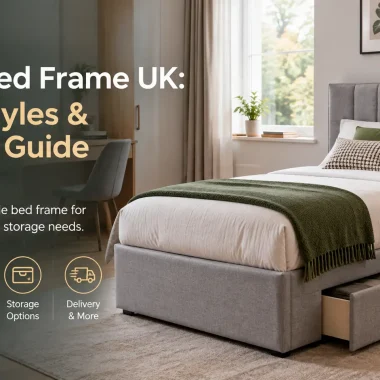
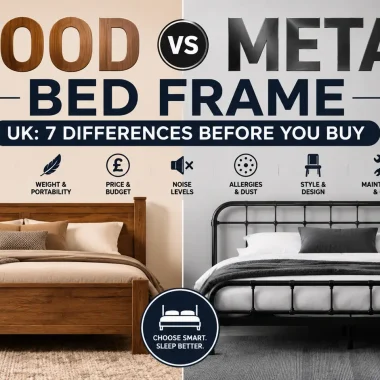
The bed frame sets the tone for the room, so your Bedroom Furniture choices should work around its size, shape, and visual weight. Wood can create a warm and natural feel, while metal can suit a lighter or more industrial look. An upholstered frame adds softness and can become the main visual feature.
Fabric upholstery also gives you more choice in colour and texture. It can work with neutral walls, strong paint colours, patterned bedding, and layered soft furnishings.
There is no single best material for every room, and the best bedroom furniture choice depends on your space and routine. Think about comfort, storage, maintenance, durability, and the design style you want to create.
Match Furniture to the Room Size
Large bedrooms can handle bigger pieces, but empty space still matters. A spacious room can look unfinished when furniture sits too far apart. Use a scale to create balance.
Small rooms need more careful planning. Choose pieces that provide useful storage without narrowing the main paths. A tall wardrobe can use vertical space, while a slim bedside table can protect floor areas.
Bedroom furniture should look proportional. Balanced bedroom furniture keeps large pieces from overpowering the room. A large bed with tiny side tables may feel unbalanced, while a small bed surrounded by oversized cabinets can make the room feel crowded.
Small Bedroom Strategy
In a compact room, focus on one or two high-impact pieces rather than many small ones. A storage bed can reduce the need for extra cabinets. A narrow bedside table can still hold a lamp, phone, and book.
Mirrors can reflect light and improve the sense of depth. Light colours can also make a small room feel open, while darker shades can still work when the lighting is strong and the design stays simple.
Use Storage Without Overfilling the Room
Storage should make the bedroom easier to manage, not turn it into a wall of cabinets. Estimate how much clothing, bedding, shoes, and personal items you actually need to store.
An ottoman bed can create a large hidden storage area under the sleeping surface. A divan can provide drawers or other storage options. Both approaches can reduce the need for separate storage furniture.
| Storage type | Best for | Main advantage | Main consideration |
|---|---|---|---|
| Ottoman | Bulky bedding and seasonal items | Large under-bed space | Needs lifting access |
| Divan drawers | Clothes and smaller items | Easy everyday access | Drawers need side clearance |
| Chest of drawers | Folded clothes | Simple organisation | Uses extra floor space |
| Wardrobe | Hanging clothes | Keeps garments organised | Needs opening clearance |
Pick Bedside Tables for Function
Bedside tables should support the bed rather than compete with it. Their height should sit comfortably beside the mattress, and their width should leave enough room for a lamp and daily essentials.
When space is limited, consider a slim table, floating shelf, or narrow cabinet. The goal is to keep the sleeping area useful without sacrificing walking space.
Choose a Wardrobe That Fits the Walls
A wardrobe needs more room than its visible width suggests because doors or drawers need space to open. Measure the full operating area before buying.
Sliding doors can help when hinged doors would interfere with the bed or main walkway. Tall wardrobes can also use vertical space efficiently when the ceiling height and access route allow it.
Before choosing bedroom furniture for clothing storage, work out whether you need more hanging space, drawers, shelves, or a mix of all three. This makes bedroom furniture more useful from day one.
Create a Balanced Colour Scheme

Colour affects how a room feels. Start with the largest visual elements, such as the walls, bed, wardrobe, and flooring. Then add smaller accents through bedding, curtains, cushions, lamps, and artwork.
A neutral bed gives you more freedom to change accessories later. This flexibility also makes bedroom furniture easier to update over time. Stronger upholstery can make the bed a statement piece, while softer shades can create a calm, hotel-inspired look.
If you already have a bold wall colour, keep the main furniture simple. If the walls are neutral, use the bed and textiles to introduce more personality.
Make the Headboard Work for the Room
A headboard can become the visual centre of the bedroom, but its size needs careful planning. A tall headboard can create a strong statement in a room with generous ceiling height. A simpler design may feel more balanced in a compact space.
If the bed sits under a window, check the sill height and window operation before choosing a tall headboard. Also consider curtains and blinds so they remain easy to use. Custom headboard heights can help when you have an unusual wall, narrow access route, or a specific design goal.
Plan Lighting Before Finalising the Layout
Lighting affects both function and atmosphere. Use layers instead of relying on one ceiling light. Bedside lamps help with reading, ceiling lighting covers general tasks, and wall lights can free up bedside surfaces.
Good lighting can make simple bedroom furniture look more refined because each piece gets the right visual focus. The result is bedroom furniture that feels intentional rather than crowded.
Work Around Doors, Windows, and Radiators
Furniture should never block the basic functions of the room. Keep doors opening fully and avoid covering radiators with large solid units.
Windows need attention too. Blocking natural light can make a bedroom feel smaller. When furniture has to sit near a window, choose a lower piece or keep that area visually light. Take photos and measurements before ordering. This quick step can prevent an expensive delivery problem later.
Choose Pieces That Work Together
Matching every item exactly can make the room feel predictable. Instead, let bedroom furniture share a few colours, finishes, or shapes. Mixing pieces can create more character, but you still need a common thread.
Use one consistent element to connect the room. This could be colour, wood tone, fabric texture, metal finish, or shape. For example, an upholstered bed, simple bedside tables, and a neutral wardrobe can feel cohesive when their tones work together. The goal is coordination, not perfect matching.
Common Bedroom Furniture Mistakes
One common mistake is buying the bed before measuring the whole room. The same rule applies to every major bedroom furniture purchase. Another mistake is ignoring the extra depth of headboards, footboards, storage mechanisms, and decorative details. Some buyers also underestimate the clearance needed for wardrobe doors and drawers. Others buy too many storage units and leave little room to walk.
Another mistake is choosing furniture only because it looks good. A beautiful cabinet that cannot hold enough clothing will become frustrating quickly. Finally, do not forget access. Check the delivery route before buying large pieces, especially if you have narrow stairs or tight turns.
A Practical Buying Checklist
Before buying, write down the room measurements and the maximum size you can use for each major piece. Keep those figures on your phone while shopping.
Check external dimensions rather than mattress size alone. Review storage access, assembly needs, materials, finish, cleaning requirements, delivery access, and the position of doors and drawers.
For upholstered pieces, check fabric options and care instructions. These details can help you choose bedroom furniture that stays practical as well as attractive. For made-to-order beds, confirm the size, headboard height, base type, storage choice, and fabric before completing your order.
Make the Bedroom Feel Larger
You do not need to remove everything to create a sense of space. Start by reducing visual clutter and keeping only useful pieces. Use tall storage on less crowded walls, keep some floor visible, and avoid filling every corner. A large mirror can reflect light, while lighter bedding and curtains can create an airier feel.
Another effective approach is to combine functions. A storage bed, bedside table with drawers, or wardrobe with shelving can reduce the number of separate pieces you need.
When Made-to-Order Furniture Makes Sense
Standard sizes suit many homes, but made-to-order furniture can help when your bedroom has unusual proportions or specific design requirements. Made-to-order upholstered beds can offer choices in size, fabric, headboard height, and storage. This can help when you need a precise fit or want the bed to match a particular colour scheme. Always confirm measurements before ordering custom pieces because the final dimensions can differ from standard furniture.
Compare Bedroom Furniture Before You Buy
Do not compare products by price alone. Look at size, construction, storage, materials, finish, warranty or returns information, delivery access, and customisation.
| What to compare | Why it matters |
|---|---|
| Overall dimensions | Shows whether the piece fits |
| Storage | Can reduce the need for extra units |
| Materials | Affects look, feel, and maintenance |
| Bed size | Controls sleeping space and floor usage |
| Headboard size | Changes the visual scale |
| Access requirements | Helps avoid delivery problems |
| Fabric or finish | Influences the final design |
Choosing Bedroom Furniture for Different Bedrooms
A main bedroom usually benefits from a comfortable bed, useful clothing storage, bedside surfaces, and enough open floor space for movement. A narrow bedroom needs careful scale planning. Choose a bed that leaves a clear path and use vertical storage where possible.
The same approach works for guest rooms and other compact spaces: focus on comfort, practical storage, and furniture that does not overwhelm the available floor area.
Frequently Asked Questions
What should I buy first for a bedroom?
Start with the bed because it usually takes the most space and defines the layout. Once you know its full dimensions, plan storage, bedside tables, lighting, and other pieces around it.
How much space should I leave around a bed?
Aim for around 60 cm of usable space beside the bed where possible. The exact amount depends on the room, bed size, doors, and furniture layout.
Is an upholstered bed good for a small bedroom?
Yes, when you choose the right proportions. A streamlined upholstered frame can add comfort and style without overwhelming a compact room. Storage underneath can also reduce the need for extra cabinets.
Does bedroom furniture need to match?
No. Connect the pieces through colour, material, shape, or finish instead. This creates a coordinated look without making the room feel like a showroom set.
Is an ottoman bed good for storage?
An ottoman bed can work well when you need to store bulky items such as spare bedding. It gives you access to a large area underneath the mattress and can reduce the need for separate storage.
What is the best furniture for a small bedroom?
Choose pieces that combine useful functions with a compact footprint. Storage beds, narrow bedside tables, tall wardrobes, and wall-mounted lighting can help protect floor space.
How do I stop a bedroom from feeling crowded?
Measure before buying, protect walking routes, and avoid adding pieces simply to fill empty walls. Choose storage that replaces rather than adds to other furniture.
Related Article: King Size Divan Bed: The Ultimate UK Guide for 2026
Conclusion
The best bedroom is not the one with the most bedroom furniture. It is the one where every piece fits the room, supports your routine, and contributes to a comfortable overall design. Start with measurements, choose the bed carefully, plan storage around real needs, and protect enough open space for easy movement.
Then use colour, texture, lighting, and accessories to create the atmosphere you want. Good bedroom furniture should make the room easier to live in, not harder to use. When you choose pieces based on size, purpose, access, and style, you can create a bedroom that feels organised, comfortable, and genuinely yours.