You wake up, swing your legs out of bed, and your lower back already complains. Many UK adults start their day this way, and most of them blame the mattress first. Often, they are right. Your mattress holds your body for seven or eight hours every night, so a poor match can turn a small ache into daily pain. That is why so many sleepers now try a pocket sprung mattress to fix the problem. But does it really work?
This guide gives you a clear, honest answer. You will learn how a pocket sprung mattress works, what research says about mattresses and back pain, who benefits most, and who should look at other options. You will also find firmness charts, size advice, common mistakes, and a short FAQ section. Every part aims to save your time, so you can decide with confidence.
Table of contents
- What Is a Pocket Sprung Mattress?
- Why Spinal Alignment Matters for Back Pain
- Is a Pocket Sprung Mattress Good for Back Pain?
- Benefits of a Pocket Sprung Mattress for Back Pain
- Drawbacks to Know Before You Buy
- How to Choose the Right Firmness
- Size and Base: The Parts People Forget
- Common Mistakes People Make
- Expert Tips for Sleeping Better With Back Pain
- Conclusion
- FAQs
What Is a Pocket Sprung Mattress?
A pocket sprung mattress contains hundreds or even thousands of small steel springs. Makers sew each spring into its own fabric pocket, so every spring moves on its own. On top of the spring layer, they add foam, fiber, or natural fillings for comfort. For a general overview of how beds are built, this info on mattresses gives useful background.
h
The older open coil design works differently. Its springs link together in one frame, so pressure on one spot spreads across the whole bed. This is the key difference, and it explains why many people choose pocket springs for back support. Many UK shoppers also add a mattress when they buy a new bed. On our store, you can add one at checkout when you order any of our upholstered bed frames.
How the Individual Springs Work
When you lie down, only the springs under your body compress. The springs beside them stay firm. This lets the mattress follow your shape instead of sinking in one big dip. Your shoulders and hips sink a little, and your waist gets the support it needs.
What Spring Count Really Means
Spring count shows how many springs sit inside the mattress. Shoppers often see numbers such as 1000, 1500, 2000, or 3000. A higher count usually gives finer support, but it is not the whole story. Spring thickness, filling quality, and build skill matter just as much. A well-built mattress with 1500 springs can beat a poor one with 3000.
Why Spinal Alignment Matters for Back Pain
Your spine has a gentle S-shape. A good mattress keeps that shape close to natural while you sleep. If the bed feels too soft, your hips sink too far and your lower back bends. If it feels too hard, your hips and shoulders cannot sink, and your waist hangs without support. Both problems strain muscles and joints overnight.
Pressure Points and Broken Sleep
Poor support also creates pressure points at the shoulders, hips, and heels. You then toss and turn all night to get comfortable. Broken sleep raises muscle tension around the spine, and that tension can make pain feel worse the next day. Better support breaks this cycle.
Is a Pocket Sprung Mattress Good for Back Pain?
For many people, yes. A pocket sprung mattress suits back pain well because each spring gives targeted support exactly where your body needs it. However, no mattress cures back pain. Back pain comes from many causes, including muscle strain, poor posture, stress, and medical conditions. A mattress can ease night-time discomfort, but it cannot fix the root cause on its own.
What the Research Says
Scientists have studied this question for years. A well-known Spanish trial in The Lancet in 2003 found that people with long-term low back pain reported less pain on medium-firm mattresses than on firm ones. Later reviews found that the evidence stays limited and that no single mattress type works best for everyone. The honest takeaway is simple. Medium-firm support works well for many people, and your personal comfort matters most.
Where This Mattress Type Helps Most
A pocket sprung mattress shines in three areas. First, it adapts to your curves, which supports your lower back. Second, it limits motion transfer, so your partner’s movements wake you less. Third, air flows easily through the spring layer, so you sleep cooler. A cooler night often brings deeper sleep, and deeper sleep helps your body recover.
Benefits of a Pocket Sprung Mattress for Back Pain
Targeted Support Where You Need It
Independent springs respond to your weight and shape. Your heavier hips sink more, while your lighter waist gets lift. This balance helps keep your spine in line from head to hip.
A Good Fit for Side and Back Sleepers
Side sleepers need room for the shoulders and hips to sink. Back sleepers need firm support under the lower back. A medium-firm pocket sprung mattress handles both positions well, especially with a quality comfort layer on top.
Better Sleep for Couples
If you share a bed with a restless partner, a pocket sprung mattress absorbs most of the movement. Fewer wake-ups mean less tiredness and less stiffness in the morning.
Long-Lasting Performance
Quality pocket springs keep their shape well. Most good models last between 7 and 10 years, which gives strong value over time.
Drawbacks to Know Before You Buy
A pocket sprung mattress is not perfect for everyone. Cheap models with thin fillings can feel hard and unforgiving. Springs also wear down over time, and an old mattress starts to sag. These mattresses weigh more than foam ones, so turning them takes effort. They also cost more than basic open coil beds.
When Another Type May Suit You Better
If you want deep, hugging pressure relief for sore hips or joints, memory foam may feel better. If a doctor or physiotherapist has advised extra-firm support, an orthopedic mattress may fit your needs. The table below compares the main options.
| Mattress Type | Support Style | Pressure Relief | Airflow | Typical Lifespan | Best For |
|---|---|---|---|---|---|
| Pocket sprung. | Targeted and springy | Medium to good | High | 7–10 years | Most back pain sufferers, hot sleepers, couples |
| Memory foam | Slow, contouring | High | Low to medium | 7–10 years | Joint pain, side sleepers |
| Orthopaedic | Firm and even | Low to medium | Medium | 7–10 years | People are advised to use firm support. |
| Open coil | Connected and basic | Low | High | 5–8 years | Guest rooms, tight budgets |
How to Choose the Right Firmness
Firmness is the biggest decision you will make. Most people with back pain do well with a medium to medium-firm feel. Your body weight also plays a role. Lighter people need a softer feel so they can sink in slightly, while heavier people need a firmer feel to avoid sagging.
| Sleeping Position | Recommended Firmness | Why It Works |
|---|---|---|
| Side | Medium | Let shoulders and hips sink so the spine stays straight. |
| Back | Medium-firm | Supports the natural curve of the lower back |
| Front | Medium-firm to firm | Stops the hips from sinking and arching the back |
| Combination | Medium-firm | Balances comfort and support as you move |
Test the Bed Before You Commit
Lie in your normal sleeping position for at least ten minutes. Slide a hand under your lower back. A small gap is fine. A large gap means the bed feels too firm, and no gap at all can mean it feels too soft. Ask for a trial period or comfort guarantee whenever possible.
Size and Base: The Parts People Forget
Size matters as much as firmness. A cramped mattress makes you twist and curl, and that adds strain. Check your measurements against the standard UK sizes below, or use our sizing guide to double-check. Makers vary slightly, so always confirm the exact size before you order.
| Size | Imperial Name | Approximate Size (cm) |
|---|---|---|
| Single | 3FT | 90 x 190 |
| Small Double | 4FT | 120 x 190 |
| Double | 4FT6 | 135 x 190 |
| King | 5FT | 150 x 200 |
| Super King | 6FT | 180 x 200 |
Short on space? A small double ottoman bed gives you a full sleeping area and hidden storage in a compact footprint.
Match the Mattress With the Right Frame
The base must carry the mattress without bending. Wide slat gaps or a worn base ruin the support, even with an excellent mattress. Many shoppers pair springs with an ottoman bed frame, which lifts up for blankets, or a divan bed frame with drawers. Both work well with a pocket sprung mattress as long as the base stays flat and firm.
Frame material also affects stability. This wood versus metal bed frame comparison explains how each type carries weight. If your frame creaks at night, try these fixes for a squeaky bed frame before you blame the mattress.
Common Mistakes People Make
Choosing a Very Firm Bed by Default
Many people believe a hard bed is best for the back. It is not. An overly firm bed leaves a gap at your waist and pushes hard against your hips and shoulders. Medium-firm usually works better.
Ignoring Weight and Sleeping Position
A mattress that suits your partner may not suit you. Always choose firmness based on your own weight and your main sleeping position.
Skipping Rotation and Care
Rotate your mattress head to foot every few months so wear spreads evenly. Many modern models have a comfort layer on one side only, so you rotate them instead of flipping them. A breathable mattress protector also keeps the filling fresh.
Expecting a Pocket Sprung Mattress to Fix Everything
Your bed is one part of the puzzle. Regular movement, stretching, good posture, and a sensible workstation all help your back. See your GP if pain lasts for weeks or keeps returning. Seek urgent medical help if back pain comes with leg weakness, numbness around the groin or buttocks, fever, or trouble controlling your bladder or bowels.
Expert Tips for Sleeping Better With Back Pain
Use Pillows Smartly
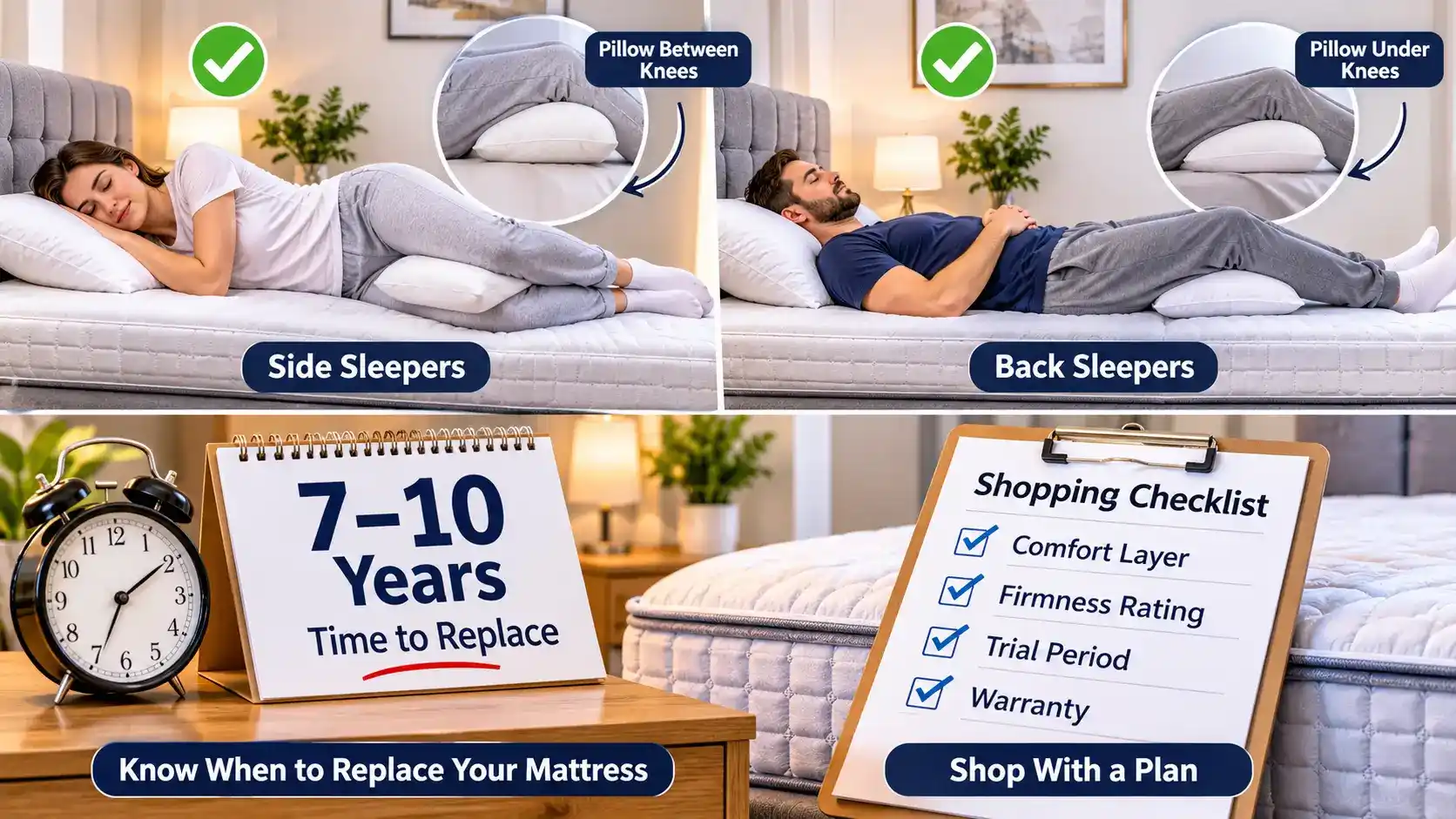
Side sleepers should place a pillow between the knees to keep the hips level. Back sleepers should place a small pillow under the knees to ease pressure on the lower back. Your head pillow should keep your neck in line with your spine.
Know When to Replace Your Mattress
Most mattresses need replacing after 7 to 10 years. Replace yours sooner if you see visible dips, hear spring noise, or wake up stiffer than you went to bed. An old mattress often causes the very pain a new one would relieve.
Shop With a Plan
Check the comfort layer, firmness rating, trial period, and warranty when you shop for a pocket sprung mattress. Compare these details instead of chasing the highest spring count. Our buying guide covers the basics, and you can always ask our team through the contact if you feel unsure.
Conclusion
So, is a pocket sprung mattress good for back pain? For most people, yes. Its independent springs follow your curves, support your spine, and reduce pressure points. A medium-firm pocket sprung mattress works especially well for side and back sleepers, and it keeps you cooler and less disturbed at night.
Still, no mattress works miracles. Match the firmness to your weight and sleeping position, check the size, and pair the mattress with a flat, sturdy base. Avoid the common mistakes, replace your bed on time, and see your GP if pain persists. A well-chosen pocket sprung mattress will give your back the best possible chance to recover while you sleep.
FAQs
Is a pocket sprung mattress firm or soft?
It can be either. Makers offer soft, medium, and firm versions, and the comfort layer on top changes the feel. Most people with back pain choose medium-firm.
Is a pocket sprung mattress better than memory foam for back pain?
Neither type wins for everyone. Springs give more bounce, better airflow, and targeted support. Memory foam gives deeper pressure relief. Pick the one that keeps your spine straight and feels comfortable to you.
How long does a pocket sprung mattress last?
Most quality models last 7 to 10 years. Heavy use, a weak base, and poor care shorten that life.
Can a pocket sprung mattress make back pain worse?
Yes, if the firmness does not suit you or the springs have worn out. A bed that is too hard or too saggy strains your spine. Test the mattress first, and replace it when it loses support.
What spring count should I choose?
For a pocket sprung mattress, 1000 to 2000 springs in a king size gives solid support for most people. Build quality and filling matter more than a very high number.
Can I use a pocket sprung mattress on an ottoman bed?
Yes. Just make sure the mattress matches the base size and that the platform stays flat and firm. Lift-up ottoman bases suit most spring mattresses well.