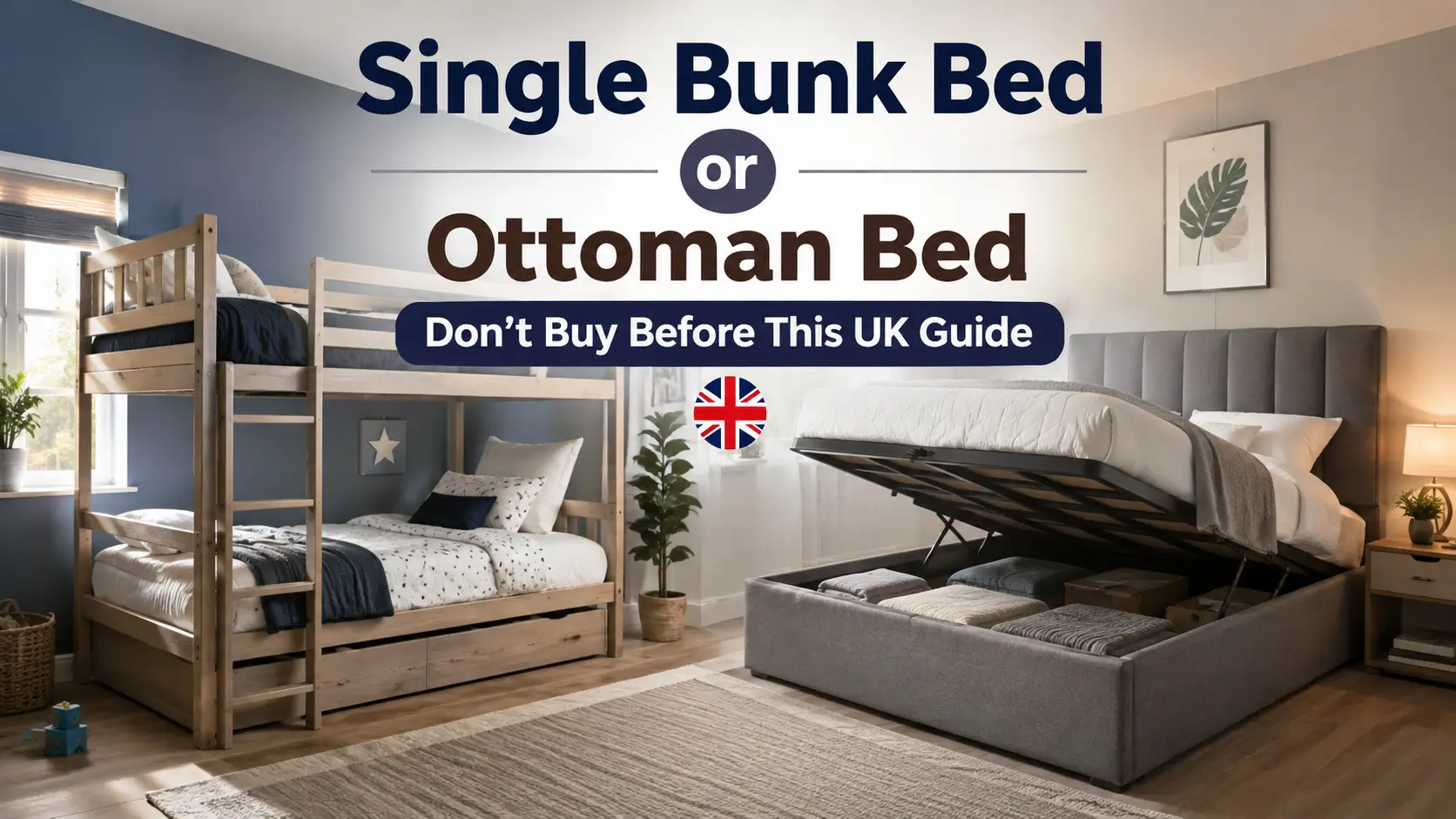
Choosing the wrong bed for a small room can waste hundreds of pounds and years of frustration. If you are torn between a single bunk bed and an ottoman bed, you are not alone. Thousands of UK parents and homeowners face this exact decision every week, and most of them rush the choice because they do not know what actually matters.
This guide clears up the confusion. You will learn what each bed offers, how UK safety rules apply, which option suits different rooms, and the mistakes that lead to regret. If you are specifically weighing up storage-friendly options, our guide to the best ottoman beds for small bedrooms is also worth a look. By the end, you will know exactly which bed fits your space, your budget, and your family’s needs.
Table of contents
- What Is a Single Bunk Bed?
- What Is an Ottoman Bed?
- Single Bunk Bed vs Ottoman Bed: Key Differences
- Benefits of a Single Bunk Bed
- Drawbacks of a Single Bunk Bed
- UK Safety Standards for a Single Bunk Bed
- When an Ottoman Bed Makes More Sense
- Common Mistakes to Avoid When Buying
- How to Choose the Right Single Bunk Bed
- Expert Tips Before You Buy
- Single Bunk Bed and Ottoman Bed: Which Should You Buy?
- Conclusion
- Frequently Asked Questions
What Is a Single Bunk Bed?
A single bunk bed is a bed frame built with two single sleeping levels stacked one above the other. It holds two standard UK single mattresses, each measuring around 90 cm by 190 cm, and it uses a fixed ladder or steps to reach the top level. Families choose this style of furniture mainly to save floor space in shared bedrooms, since the design lets two children sleep in the footprint that one bed would normally take up alone.
Most frames are made from solid wood or powder-coated metal, and many can be split apart later into two separate beds. This flexibility makes the design a smart long-term buy, since it can adapt as children grow or move into their own rooms.
How It Differs From a Standard Single Bed
A standard single bed sits on the floor with one sleeping surface. A bunk-style frame stacks two of these surfaces vertically, connected by side rails, a ladder, and guardrails on the top level. The lower level sits close to the ground like a normal bed, while the upper level requires the extra safety features that a raised sleeping platform demands.
What Is an Ottoman Bed?
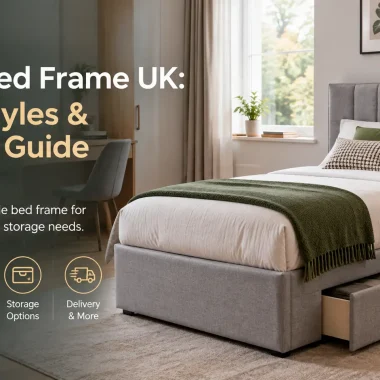
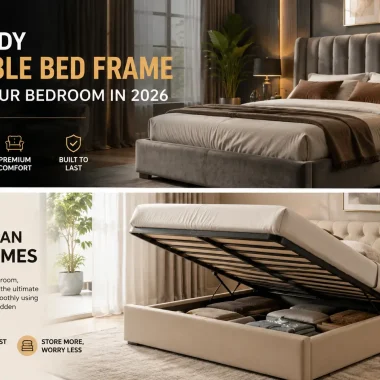
An ottoman bed looks like a normal single, double, or king-size frame, but the base lifts up on a gas-strut mechanism to reveal a large hidden storage compartment underneath. Instead of stacking two sleeping levels, it stores bedding, clothes, or suitcases beneath the mattress itself. A single ottoman bed typically measures 90 cm by 190 cm, matching a standard UK single mattress, with a storage depth of around 20 to 25 cm.
The main appeal is decluttering. It suits solo sleepers, teenagers, students, and those in small flats where wardrobe space runs out fast. Unlike a bunk-style frame, this bed does not add sleeping capacity, so it works best when you only need one bed but want maximum storage underneath it.
Side-Lift vs End-Lift Ottoman Beds
Ottoman beds usually lift from the side or the foot end. A side-lift model needs clear floor space along one long edge of the bed, which suits rooms with open space beside the frame. An end-lift model needs space at the foot of the bed instead, which works better in narrow rooms where one side sits against a wall. Choosing the right lift direction matters just as much as choosing the right size.
Single Bunk Bed vs Ottoman Bed: Key Differences
The table below breaks down the core differences so you can compare both options at a glance before deciding.
| Feature | Single Bunk Bed | Single Ottoman Bed |
|---|---|---|
| Sleeping capacity | Two people | One person |
| Main purpose | Saves floor space for two sleepers | Adds hidden storage for one sleeper |
| Storage | Usually none, unless a combo model | Large under-bed compartment |
| Best for | Siblings, shared rooms, sleepovers | Solo sleepers, small flats, teens |
| Assembly | Moderate, taller structure | Simple, lower profile |
| UK safety standard | BS EN 747-1:2024 | General furniture safety rules |
| Typical price range | Budget to mid-range | Mid-range to premium |
This comparison shows that these two furniture types solve two completely different problems. One multiplies sleeping space, and the other multiplies storage space. Your decision should start with the actual problem you are trying to solve at home, not with which option looks nicer in a showroom photo.
Benefits of a Single Bunk Bed
Space-Saving Design for Shared Rooms
A single bunk bed is the obvious winner when two children share one bedroom. Instead of squeezing two separate frames into a cramped space, it stacks the sleeping area vertically, leaving the rest of the floor free for a wardrobe, desk, or play area. Many UK homes, especially terraced houses and flats, have small second and third bedrooms where this vertical design genuinely changes how usable the room feels.
Practical for Sleepovers and Growing Families
This furniture also gives families flexibility for visiting cousins, friends, or grandchildren staying over. Since most frames can later separate into two individual beds, the furniture keeps its value even after children outgrow sharing a room. This adaptability is one reason it remains such a popular choice across the UK, year after year.
Budget-Friendly Compared to Buying Two Beds
Buying one single bunk bed is almost always cheaper than buying two separate frames and two mattresses at full price. Retailers often bundle mattresses with the frame, which lowers the overall cost per sleeper. For families on a tight budget who still need two beds in one room, this option offers real savings without sacrificing comfort.
Drawbacks of a Single Bunk Bed
No bed is perfect, and this design comes with a few genuine downsides worth knowing before you buy. The top bunk is not suitable for very young children, and climbing up and down a ladder every night can become tiring or risky if a child is unwell, half asleep, or afraid of heights. Cleaning and changing bedding on the top level is also harder than with a normal bed, since you often need to kneel or stretch across the frame.
Noise is another factor. Movement on the top bunk can be felt and heard by the person sleeping underneath, which sometimes disturbs sleep for younger or more sensitive children. Ceiling height matters too, since the top mattress needs enough clearance above it for a child to sit up comfortably without hitting the ceiling.
Resale and Room Flexibility
A tall bunk frame is harder to move than a standard bed, and it rarely suits a room with sloped ceilings or low doorways. If your family expects to move house often, factor in how easily the frame disassembles and fits through doorways and stairwells before you commit to buying one.
UK Safety Standards for a Single Bunk Bed
Safety is the single most important factor when buying this type of furniture, and the UK has strict rules to protect children using elevated sleeping platforms.
The BS EN 747 Standard Explained
Every single bunk bed sold in the UK should meet BS EN 747-1:2024, the British and European safety standard covering the strength, durability, and construction of bunk beds and high beds. This standard applies to frames with an internal length greater than 1,400 mm and a maximum bed base width of 1,200 mm, where the upper bed surface sits 600 mm or more above the floor. Before buying, check the product listing or label for confirmation that it complies with this standard, since compliant frames are tested against falls, structural failure, and entrapment risks.
Minimum Age and Guardrail Rules
UK safety guidance recommends that children must be at least six years old before using the top bunk, because younger children typically lack the balance and spatial awareness needed to climb safely, especially at night. The lower level of a single bunk bed can usually be used from around two to three years old, since it carries no risk of falling.
Guardrails on a compliant frame must extend at least 16 centimetres above the mattress on all sides of the top level, and the mattress must fit snugly with no dangerous gaps. Experts also recommend leaving no more than a 1 cm gap between the mattress edge and the frame, since a loose-fitting mattress increases the chance of a limb becoming trapped. Always check that the ladder has evenly spaced rungs and that gaps in the rails are small enough to prevent a child’s head or body from slipping through.
Placement and Ongoing Maintenance
Position a single bunk bed away from windows, curtain cords, hanging lights, and radiators to reduce accident risk. Once assembled, check the frame every few months for loose screws, cracked wood, or worn ladder rungs, since regular wear can weaken joints over time. A well-maintained frame should last many years, but only if you keep it properly tightened and inspected.
When an Ottoman Bed Makes More Sense
An ottoman bed becomes the better choice the moment storage matters more than doubling sleeping capacity. If you have one child or one adult who needs somewhere to store bedding, out-of-season clothes, or luggage, this option solves that problem without the safety considerations that come with an elevated bunk frame. Small flats, box rooms, and student accommodation particularly benefit from an ottoman bed, since the storage compartment replaces the need for a separate chest of drawers or under-bed boxes.
Unlike a raised bunk frame, an ottoman bed sits low to the ground, so there is no climbing involved and no age restriction to worry about.
Storage Depth and What It Actually Fits
Storage depth on a single ottoman bed usually ranges from 20 to 25 cm. That is enough room for folded bedding, seasonal clothing, spare pillows, and small suitcases, though it will not fit bulky items like a full winter duvet set without careful folding. Always check the exact depth listed by the retailer, since it varies between models and directly affects how much you can realistically store.
Common Mistakes to Avoid When Buying
Many buyers rush into ordering a single bunk bed without measuring the room properly, which leads to a frame that blocks doors, windows, or wardrobes once assembled. Always measure the full height of the room, not just the floor space, since the top level needs clearance for a child to sit upright.
Another frequent mistake is ignoring the safety standard label entirely. Some cheaper imported frames skip proper testing, so always confirm certification against BS EN 747-1:2024 before paying for one. Buyers also often choose the wrong mattress depth, which can push a child above the guardrail height and defeat the safety design of the frame. Finally, many parents place a child under six on the top bunk simply because the child asked, without considering the real fall risk that UK guidance warns against.
With an ottoman bed, the most common mistake is underestimating clearance space. Buyers often forget to leave room beside or at the foot of the frame for the lid to lift fully, which makes the storage compartment awkward or impossible to access once the bed is against a wall.
How to Choose the Right Single Bunk Bed
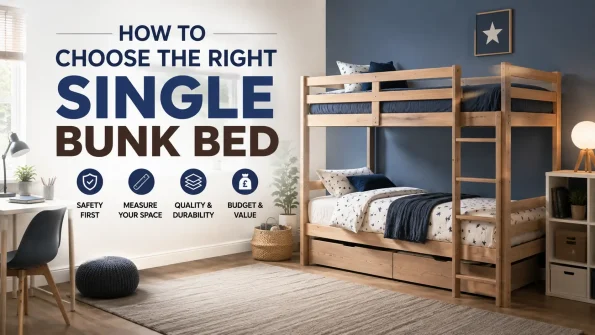
Start by measuring your room’s length, width, and ceiling height before browsing frames online. Decide whether you need a permanent two-sleeper setup or a frame that can later split into two single beds, since this affects which style suits your family long term. Check the maximum weight rating for both levels, particularly if older children or teenagers will use the top bunk.
Material matters too. Solid wood frames tend to be sturdier and quieter, while metal frames are usually lighter and cheaper but can creak more with movement. Always buy a mattress designed specifically for bunk use, since standard thick mattresses can raise a sleeper above the safe guardrail height.
Room Size Recommendations
A single bunk bed generally needs a room at least 2.5 by 3 metres to leave enough walking space and ceiling clearance. Smaller box rooms can still work, but you may need to sacrifice a wardrobe or desk to fit the frame comfortably. An ottoman bed needs less overall floor allowance, though you should still leave around 60 to 90 cm of clearance for the lid to lift without hitting a wall or window. You have to read this safety guide first.
Expert Tips Before You Buy
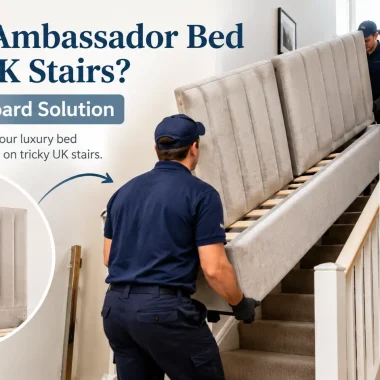
Before placing an order, ask the retailer directly whether the frame complies with BS EN 747-1:2024, since reputable UK sellers will confirm this without hesitation. Measure your doorways and staircases too, not just the bedroom, since flat-pack bunk frames can still arrive in long, heavy boxes that are hard to manoeuvre through tight corners. If you are choosing between a single bunk bed and an ottoman bed for a child’s room, involve the child in the decision where appropriate, since comfort and excitement about their new bed can make bedtime routines much smoother.
Also check the warranty and after-sales support offered by the retailer. A frame that meets safety standards on paper still needs replacement parts occasionally, particularly guardrail bolts and ladder brackets, so a responsive seller saves real hassle later.
Single Bunk Bed and Ottoman Bed: Which Should You Buy?
If two people need to sleep in one room, a single bunk bed remains the most practical and cost-effective solution available in the UK market. If one person needs a bed plus serious storage, an ottoman bed solves that problem far more elegantly than any bunk design ever could. Some households even combine both, placing a bunk frame in a shared children’s room and an ottoman frame in a guest room or home office, so each space gets the furniture that actually matches its purpose.
Related Article: Small Double Bed Frames UK: Handcrafted & Made to Order
Conclusion
Deciding between a single bunk bed and an ottoman bed comes down to one simple question: do you need more sleeping space or more storage space? A single bunk bed wins when two children or guests must share one bedroom, offering a budget-friendly, space-saving solution that has stood the test of time in UK homes. An ottoman bed wins when storage is the priority, particularly in small flats, student rooms, or spaces where clutter is the real enemy.
Whichever you choose, always check UK safety standards, measure your room carefully, and avoid the common mistakes covered in this guide. A little research now saves years of regret later, and hopefully, this guide has given you everything you need to buy with total confidence.
Frequently Asked Questions
Is a single bunk bed safe for children under six? No. UK safety guidance recommends that only children aged six and above use the top bunk, since younger children typically lack the balance and awareness needed to climb safely.
What UK standard should a single bunk bed meet? A compliant frame should meet BS EN 747-1:2024, the British and European standard covering strength, durability, and structural safety for bunk beds and high beds.
Can the frame be split into two separate beds? Many single bunk bed frames are designed to separate into two individual single beds, giving families flexibility as children grow older or move into their own rooms.
Does an ottoman bed offer more storage than a bunk bed? Yes. An ottoman bed is built specifically for storage, with a lift-up base revealing a compartment underneath, while a standard bunk frame usually offers little to no built-in storage.
How much weight can a single bunk bed hold? Weight limits vary by manufacturer, but most compliant frames are tested to support the combined weight of two sleepers plus mattresses, so always check the specific product’s rated capacity before buying.
Is an ottoman bed harder to assemble than a bunk bed? Generally, no. An ottoman bed sits low to the ground with a simpler frame, while a single bunk bed involves a taller structure, a ladder, and guardrails, which usually takes longer to assemble correctly.