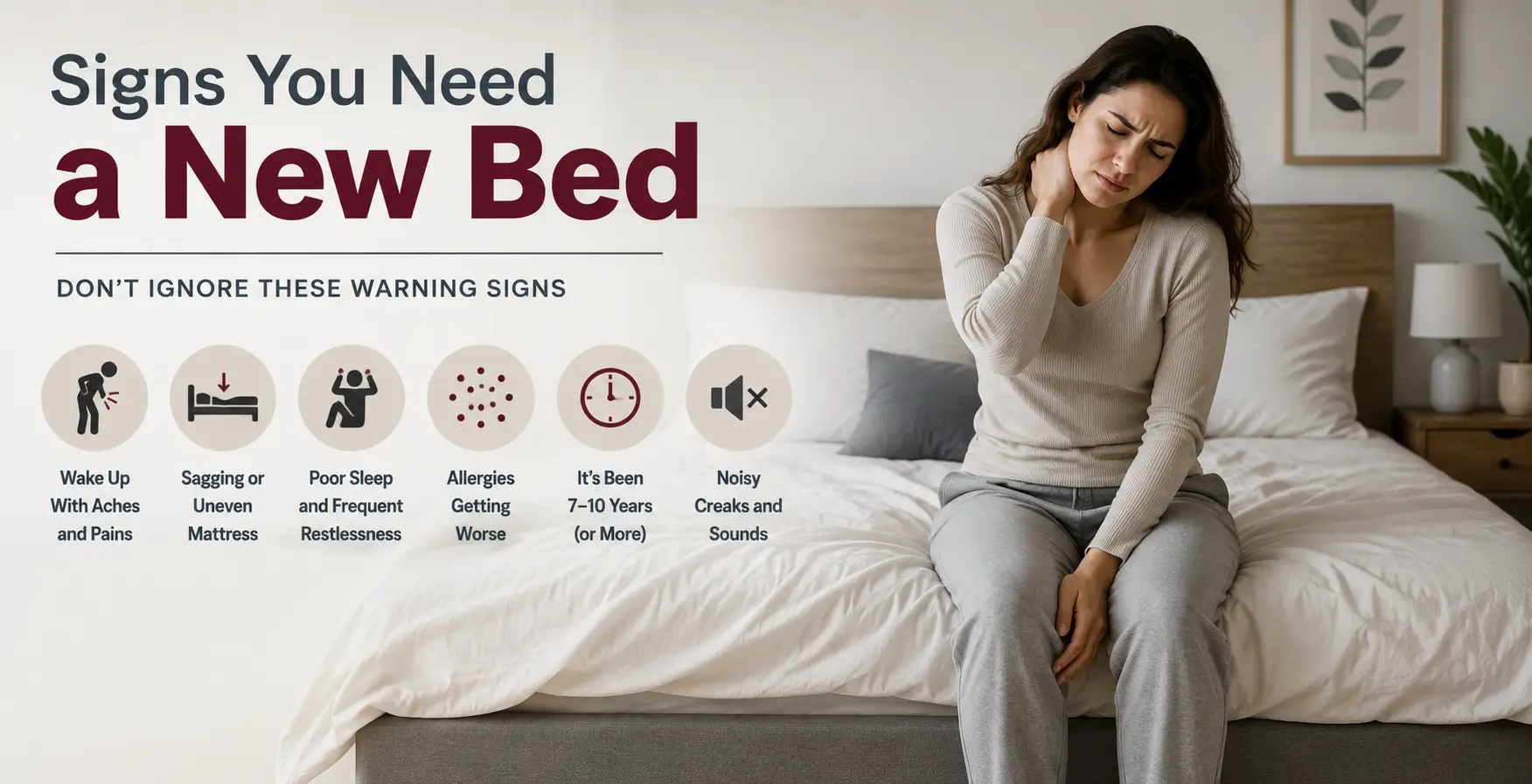
Ever had a sleep where you woke up feeling even more tired than before you slept? You may be experiencing chronic pain in your back, hearing your bed squeak each time you make a move, or not finding the right position to rest in. These are often disregarded signs you need a new bed; however, many people sleep on the same old bed for years without understanding the impact it has on their health and well-being.
No matter if you’re a fan of a luxury fabric bed, a traditional wooden bed, an upholstered wingback bed or a practical ottoman bed, every bed comes with a lifespan. As time goes on, the wear of daily use diminishes the support, impacts spine position, and makes good sleep more difficult.
This extensive guide will explain the most significant signs that you need a new bed, the longevity of various kinds of beds, and why changing your old bed can actually have a massive effect on your sleep and health.
Why Replacing Your Bed Is More Important Than You Think
While many homeowners will be occupied with upgrading their sofas, kitchen appliances, or even their carpets, there is always one item that will be forgotten, although it is used daily—their bed.
Your bed constantly works to hold your weight, keep proper posture, and help you reduce joint pressure during sleep. With the passing of years, it starts wearing out, and so does the structure supporting it.
A bad quality of sleep caused by an old bed leads to many problems, such as:
- Poor sleep quality;
- Lower back pain;
- Neck and shoulder tension;
- Hip pain;
- Insomnia;
- Joint pressure;
- Loss of spine support;
- Hard time falling asleep;
- Sleepiness all day.
All these problems may be mistaken for stress, age, or busy lifestyle influence, while the cause may actually lie right in your bedroom.
If you feel tired no matter how long you slept at night, you should check your bed’s condition.
1. You Wake Up With Back, Neck or Shoulder Pain
One of the most definitive signs you need a new bed is when you wake up feeling sore, only for the feeling to dissipate as the day wears on. The spine has a natural curvature shaped in an S pattern. While asleep, the combination of the mattress and bed frame should be responsible for keeping this curvature in place. A worn-out mattress is incapable of even distributing your weight anymore; it will not support your spine but instead create pressure points that cause the muscles to adjust.
It can happen, especially if the mattress has become lumpy or the bed frame is unable to offer any proper support anymore.
Common symptoms include:
- Chronic back pain
- Morning neck stiffness
- Shoulder pain
- Hip pain when sleeping on one’s side
- Tingling sensation in arms
- Muscle stiffness upon waking up
In most cases, people tend to think that their office chairs or activities are responsible for the problem, but when the pain decreases right after leaving bed, then it might be time to rethink the sleeping surroundings.
Why It Happens
As a mattress gets older, it creates indentations in the areas that receive the most pressure. This indentation causes the spine not to be able to stay in alignment, and as such, your hips or shoulders will sink down below the level of your body. Another cause could be an old fabric bed frame whose support slats have worn down or moved.
2. Your Mattress Is Sagging, Lumpy or Uneven
Another clear indication that it is time to replace your bed is sagging.
A good mattress must provide an even sleeping surface for a number of years. Nonetheless, the regular pressure makes some inner materials flatten permanently.
Some indicators of a damaged mattress are as follows:
- Indentations in the middle
- Deep imprints of your body
- Uneven sleeping surface
- Lumps under the covering
- Soft places
- Edges that sag when sitting on the mattress
The slightest sagging affects your posture while sleeping.
Try imagining yourself driving a car with one of its wheels noticeably sagging compared to the others. It will not be long until you realize the difference.
3. Your Bed Frame Makes Noise Every Time You Move
The bed should give you stable and noiseless support. Whenever there are squeaking or squealing noises made with every single motion, do not simply overlook them.
A noisy bed frame usually denotes the following:
- Loose bolts
- Worn joints
- Cracks in wooden parts
- Bent metal parts
- Dented slats
- Weakened centre rails
Though screws may fix your problem at first, the constant noise may be a sign of fatigue.
Why This Matters
A wobbly bed frame not only produces unwanted noises, but it also decreases mattress stability. The motion of the bed frame leads to an unequal pressure distribution that will increase wear and make the bed less comfortable.
This especially concerns upholstered and fabric bed frames, where the mechanism providing the support is covered by the material used in its construction. It is possible to prolong the life of your bed with proper maintenance, but after the mechanisms break down, replacement becomes the best option.
4. You Toss and Turn Throughout the Night
Minimal body movements characterize sleep quality. If you keep changing positions, you wake up very often, or you can’t seem to get comfortable at all, your bed might not be doing what it should be doing anymore.
One of the most common yet unnoticed signs you need a new bed. Once your mattress is unable to alleviate pressure points, your body will unconsciously move positions during your sleep.
Unluckily, these movements will disrupt your normal sleep cycle even without waking you up. The consequences can be:
- Tiredness
- Difficulty concentrating
- Lack of energy
- Headaches in the morning
- Bad temper
- Inability to recover from workouts
Pressure Relief Matters
An ideal mattress must ensure that your weight is evenly distributed across the sleeping surface. If there is no adequate relief of pressure, your shoulders, hips, and lower back are carrying extra weight, and you have to keep turning throughout the night. The more this persists, the more sleep quality you will lose.
5. You Sleep Better Somewhere Else
This may be the simplest way to know if your existing bed is the culprit. It often takes experiencing a good night’s sleep in a good hotel or holiday cabin before one realises that one’s own bed isn’t all that comfortable anymore.
Ask yourself:
- Do I wake up with less pain when travelling?
- Do I fall asleep faster in another bed?
- Do I feel more refreshed after sleeping elsewhere?
- Do I experience fewer aches when staying away from home?
If the answer is yes, your bed is sending a clear message.
Why This Happens
People tend to adjust to the ageing mattress, thus failing to realize that it has become uncomfortable. Since it takes a few years, people will not realize the amount of support lost until they feel a more comfortable bed.
It is very common for homeowners who do not change their beds due to the fact that “they still look fine”. Looks do not always reflect what happens in terms of functioning. A bed can look very good and provide way less support than before.
A Simple Test
On the other hand, if you tend to enjoy sleeping better while away in hotels yet have difficulty sleeping comfortably at home, see how long ago you purchased your current mattress. It is possible that if you’ve had it for ten years or more, replacing your old bed may be highly beneficial to your well-being.
6. Your Bed Is More Than 8–10 Years Old
Determining whether you need a new bed can be as simple as checking how old your bed is. Even if your bed still looks good, its inner construction may have deteriorated over time.
When homeowners ask “How often should you replace your bed?”, the answer varies from family to family, but the consensus among sleep experts is that you should check your bed every 8–10 years.
But how long does a bed last? Factors affecting the lifetime of a bed include the following:
- Quality of materials
- Frequency of use
- Body weight
- Maintenance
- Type of bed frame
- Mattress quality
Average Lifespan of Different Beds
| Bed Type | Average Lifespan |
| Fabric bed frame | 10–15 years |
| Upholstered bed | 10–15 years |
| Wooden bed frame | 15–20+ years |
| Metal bed frame | 15–20 years |
| Ottoman bed mechanism | 8–12 years (with proper maintenance) |
| Mattress | 7–10 years |
Why Age Matters
Each night, there are several hundred kilograms of pressure exerted on your bed as you roll around in your sleep. The constant stress over many nights will lead to the following:
- Support slats
- Central beams
- Joints
- Upholstery
- Coils
- Fastenings
Although the degradation may occur very gradually, the consequences are low support and poor sleep.
A bed that is coming close to ten years of age should be examined thoroughly, even if it looks fine.
7. Your Bed Looks Worn Out
Appearance alone is not an absolute guide on when to change your bed; however, if there are any signs of damage, then most probably, your bed frame will also be experiencing deterioration. With prolonged use, wear will become evident.
Consider these factors:
- Ripped upholstery
- Faded materials
- Missing buttons
- Flat headboards
- Scratches
- Damaged edges
- Faulty seams
- Peeling fabric
- Misshapen legs
- Cracks in wooden panels
When it comes to a fabric bed frame, the appearance of damaged upholstery is no longer only a matter of aesthetics; small holes may grow bigger, and damaged padding makes cleaning hard.
First Impressions Matter
The bed is usually the biggest item of furniture in your bedroom. A bed that looks old can age the whole room – even when you have redecorated. When you replace an old bed, it makes more of an impact on the look of your room than painting walls or purchasing new accessories.
8. Your Allergies Seem Worse at Night
It is often not known by many people that an old bed can impact indoor air quality. With time, mattresses and upholstered beds will have built up dust mites.
- dead skin cells,
- hair from pets,
- pollen,
- dust,
- moisture,
- allergens.
No matter how much you clean and vacuum, it is impossible to eliminate all the above particles from inside old products. If your allergies seem to be getting worse whenever you are in bed, you could be suffering because of your sleeping area.
Common Symptoms
- Sneezing at nighttime
- Runny nose
- Watery eyes
- Congestion in the morning
- Itchy skin
- Asthma attacks
It does not necessarily indicate an unhealthy bed; it just indicates years of wear and tear. By replacing both your mattress and bed frame, particularly if they are more than ten years old, you will improve your sleeping experience.
9. Your Lifestyle Has Changed
There is another hidden sign you need a new bed since it fails to meet the needs of your lifestyle. For example, you may have got yourself a double bed while living single, but now you are living with your spouse. Or maybe you have moved to a smaller place where you need more storage space.
You May Need a New Bed If:
- You have relocated.
- You have got married or cohabited with your partner.
- You will soon be welcoming a baby into the world.
- You work from home and need a multipurpose bedroom.
- You need additional storage in the bedroom.
- You have become less mobile.
- You feel that your existing bed is too small.
Upgrading to an ottoman bed or storage bed can give you additional storage without reducing your floor area, for many UK homes. In the same vein, couples can improve their sleeping experience by switching to a king-size bed from a double bed. There are many reasons why you may want to change your bed, and it is not necessarily because your bed has worn out.
10. You Simply Don’t Feel Comfortable Anymore
In some cases, it’s not immediately apparent.
- Your bed isn’t damaged.
- It doesn’t creak.
- It remains attractive.
But each night, you have difficulty finding a comfortable position. This is one of the biggest indications that you need a new mattress, since comfort is extremely subjective.
- Your body has changed.
- Your sleeping habits have altered.
- You’ve acquired health problems.
What was once the perfect bed ten years ago may now fail to deliver what you need.
Ask yourself:
- Do I struggle to fall asleep?
- Do I constantly adjust my pillows?
- Do I wake up tired every morning?
- Does my bed feel harder or softer than I prefer?
If the answer is yes, your comfort needs may have changed. A new bed frame paired with a supportive mattress can dramatically improve your sleeping experience.
How to Choose a New Bed
Buying a replacement shouldn’t be based on appearance alone.
Instead, consider the following factors.
Choose the Correct Size
Your bedroom should have enough space to move comfortably around the bed.
Popular UK sizes include:
- Single
- Small Double
- Double
- King Size
- Super King
If you’re sharing your bed, upgrading to a larger size can significantly improve sleep quality.
Select a Durable Bed Frame
A high-quality bed frame forms the foundation of your sleep setup.
Look for:
- Strong centre support
- Solid construction
- Durable fixings
- High-quality upholstery or timber
- Reliable manufacturer warranty
Consider Storage
If space is limited, storage beds provide practical solutions.
Popular options include:
- Ottoman beds
- Drawer storage beds
- Lift-up storage beds
These maximise bedroom storage without requiring additional furniture.
Think About Bedroom Style
Whether you prefer contemporary or traditional interiors, choose a design that complements your décor.
Popular styles include:
- Fabric bed frames
- Wingback beds
- Chesterfield beds
- Minimalist platform beds
- Wooden shaker beds
A well-chosen bed becomes the focal point of your bedroom for many years.
Invest in the Right Mattress
Even the highest-quality bed frame won’t provide proper comfort if paired with an unsuitable mattress.
Consider:
- Sleeping position
- Firmness preference
- Body weight
- Temperature regulation
- Motion isolation
Choosing the correct mattress is just as important as selecting the right bed.
Final Thoughts
Identifying the signs that you need a new bed can really have an impact on your health and general well-being. Your bed is essential in helping you get through the night, and as your bed gets older, so does its ability to give you comfort and spinal support.
Whatever is bothering you, whether it’s pain, bad sleep, the squeaking of your old bed frame, or simply the ageing of the mattress, getting a new bed at the right moment will completely change your sleep. Buying yourself a good bed frame, mattress, and bed that fits your needs is one of the best decisions you can make regarding not only your bedroom but also your sleep quality and overall well-being.
Don’t wait till it’s too late – take care of your bed before it stops being useful. A good and reliable bed will make sure that you get healthier sleep and have better mornings.
Frequently Asked Questions
The most frequent reasons why you need a new bed are pain on wake-up, poor sleep quality, sagging, squeaking, damage, and better sleep on another surface.
Yes. Your mattress aging or a broken bed frame can result in spine misalignment and cause lower back pain, stiff neck, shoulder pain, etc.
A high-quality fabric bed frame lasts from 10 to 15 years, while wooden and metal beds can be used longer. The mattress should be replaced once every 7-10 years.
If both components are old and worn out, it is better to change them both at once in order to feel comfortable and have proper sleep support.
Absolutely. A fabric bed frame can provide a lot of comfort, durability, and style for more than 10 years.
Table of contents
- Why Replacing Your Bed Is More Important Than You Think
- 1. You Wake Up With Back, Neck or Shoulder Pain
- 2. Your Mattress Is Sagging, Lumpy or Uneven
- 3. Your Bed Frame Makes Noise Every Time You Move
- 4. You Toss and Turn Throughout the Night
- 5. You Sleep Better Somewhere Else
- 6. Your Bed Is More Than 8–10 Years Old
- 7. Your Bed Looks Worn Out
- 8. Your Allergies Seem Worse at Night
- 9. Your Lifestyle Has Changed
- 10. You Simply Don’t Feel Comfortable Anymore
- How to Choose a New Bed
- Final Thoughts
- Frequently Asked Questions